Sceye HAPS Specs Including Endurance, Payload And Breakthroughs In Battery
1. Specifications provide you with the details of what the Platform can actually do
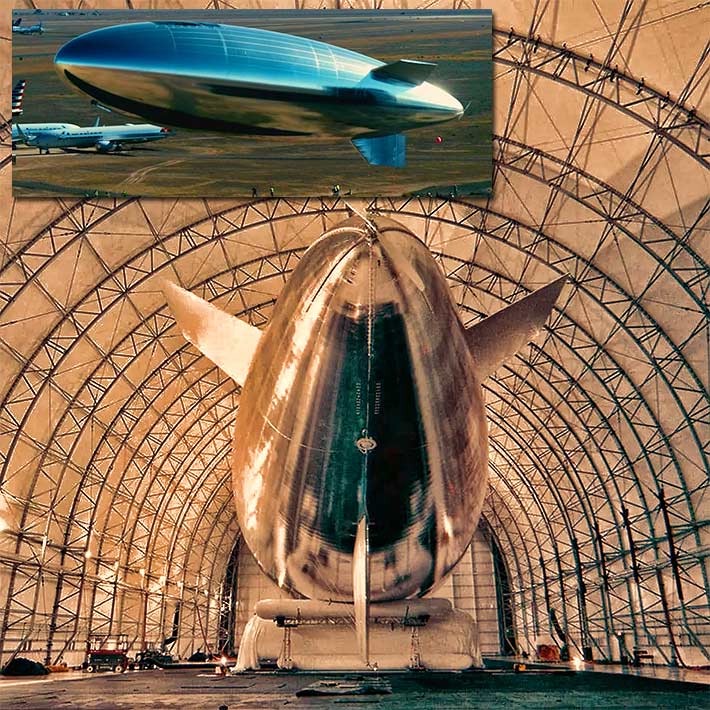
There’s a tendency within the HAPS sector to talk about goals rather than engineering. Press releases explain coverage areas agreement with partners, commercial timelines, but the more difficult and more informative discussion is about specifications, what the vehicle actually has to carry as well as how long it is up for, and the energy systems that make lasting operation feasible. For anyone trying figure out whether a stratospheric system is actually mission-ready or in the development phase of promising prototypes, capacities for payloads, endurance estimates and battery efficiency are where the actual substance lives. False promises of “long endurance” and “significant payload” aren’t difficult. Delivering both simultaneously in a stratospheric environment is the challenge in engineering that distinguishes reliable programs from the frenzied announcements.
2. Lighter-Than-Air Architecture Changes the Payload Equation
The main reason why Sceye’s airship design can be able to carry significant payload is buoyancy takes care of the fundamental task that keeps the vehicle moving. This is not a small difference. Fixed-wing solar powered aircrafts must generate aerodynamic lifting continuously which is a major energy consuming process and places structural constraints on it that limit the amount of mass a vehicle can carry. Airships that are floating in the stratosphere does not expend energy fighting gravity in the same way – so the energy generated from its solar array and the structural strength of the vehicle, could be directed towards propelling, stationkeeping and payload operation. This results in a payload capacity that fixed-wing HAPS designs at comparable endurance genuinely struggle to match.
3. Payload Capacity Determines Mission Versatility
The practical importance of higher capacity payloads becomes evident when you take a look at what stratospheric operations actually demand. The payload of telecommunications – antenna systems such as signal processing hardware, beamforming equipment — has real weight and volume. So does a greenhouse gas monitoring suite. And so does a wildfire identification in the form of an Earth observation package. Each of these missions properly requires equipment that is large. Multiple missions at once requires more. The airship specifications of Sceye are built with the idea that a stratospheric aircraft should be capable of carrying a efficient mix of payloads than requiring operators to choose between connectivity and observation because the vehicle cannot accommodate both at the same time.
4. Endurance is Where Stratospheric missions can win or lose
A platform that can reach stratospheric elevation for several days before needing drop is useful for demonstrations. A platform that holds position for months or weeks at one time is helpful for designing commercial services. The distinction between those two results is nearly entirely an energy story — specifically, whether or not the vehicle is able to produce enough solar power in daylight hours to run all its systems and charge its batteries enough to continue full function through the night. Sceye endurance goals are based on the challenge of diurnal cycles making sure that overnight energy is considered not as a flimsy goal but as a standard specification that all other design elements needs to be crafted around.
5. Lithium-Sulfur Batteries Are a True Step In the Right Direction
The chemistry in the batteries that power conventional electronic devices and electric vehicles, particularly lithium-ion has energy densities that result in restrictions for high-end endurance applications. Every kilogram of battery mass that is carried in the air is a kilogram not available for payload, yet there is a need for enough stored energy for a vast platform running through a tense night. The chemistry of lithium-sulfur batteries alters this equation substantially. When energy density exceeds 425 Wh/kg, lithium-sulfur cells will store significantly more power per unit of mass than comparable lithium-ion cells. For a vehicle weighing a lot, in which every kilogram of battery mass is an opportunity cost in payload capacity, this increase in energy density can’t be marginal, it’s structurally significant.
6. New advances in the efficiency of solar cells are the Other Half of the Energy Story
Battery energy density determines how much power it can store. Solar cell efficiency will determine how quickly you’ll be able to replenish it. Both matter, and the advancement for one without progression in the other creates a disjointed energy architecture. The advancements in high-efficiency photovoltaic cells and multi-junction cell designs that are able to capture a larger range of solar energy compared to conventional silicon cells — have significantly improved the power harvesting capacity of HAPS powered solar vehicles during daylight hours. Along with lithium sulfur storage, these advances make a true closed power loop possible: creating and storing enough energy throughout the day for all devices to operate indefinitely with no input from outside energy sources.
7. Station Keepers Draw Constantly From the Energy Budget
It’s easy to think of endurance solely as remaining in the air. However, for the stratospheric spacecraft, remaining on the ground is just a part of the equation for energy. Stationkeeping — continuously maintaining a position against the stratospheric wind by constant propulsion draws power in a continuous manner and is the largest portion of energy consumption. The energy budget has to include station keeping as well as payload operation, avionics, thermal management, and communications systems all at once. That’s why the specifications that refer to endurance without providing the system that is operating during the duration are hard to measure. Truly accurate endurance estimates assume full operational load, and not a low-level configuration of the vehicle to coast with the payload off.
8. The Diurnal Cycle Is the Design Constraint Everything Else is Flows from
Stratospheric engineers speak about the diurnal phase — the day-to-day rhythm in the availability of solar power- as the central constraint upon which platform architecture is constructed. During daylight the solar array should generate enough energy to power every system and charge the batteries to a sufficient level. When night falls, the batteries should be able to support all systems until sunrise, and without moving off, affecting their performance or entering some kind of low-capability mode that would disrupt a continuous monitoring or connectivity mission. Constructing a vehicle that can move this needle consistently for day after day, for months at a stretch, is the core design challenge of solar powered HAPS development. Every single specification choice such as solar array size, battery chemistry, propulsion efficiency, power draw of the payload -feeds into the same rule of thumb.
9. This is because the New Mexico Development Environment Suits This Kind of Engineering
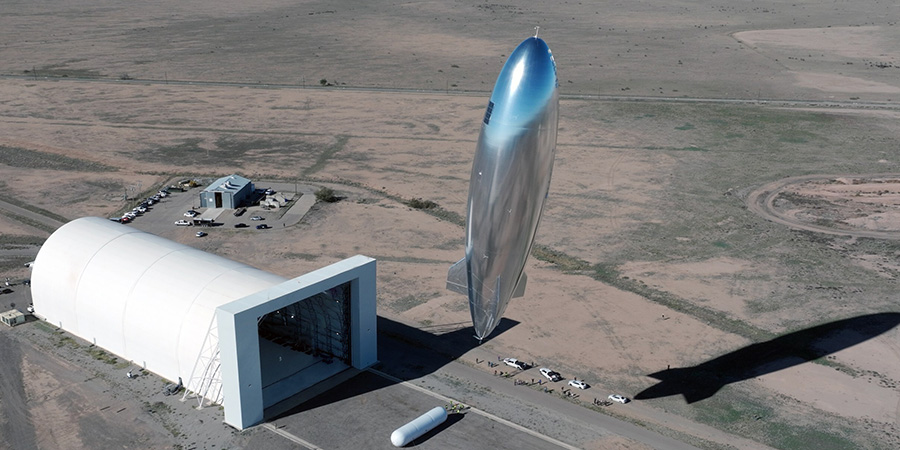
Designing and testing a high-altitude airship requires airspace, infrastructure, and atmospheric conditions that aren’t available everywhere. Sceye’s base in New Mexico provides high-altitude launch and recovery capability, clear skies to conduct solar tests along with access to kind of vast, continuous airspace that long-term flight testing needs. Within the field of aerospace companies in New Mexico, Sceye occupies one of the most unique positions — focusing on stratospheric lighter air systems, not program for rocket launches that are usually used in New Mexico. Its engineering rigor for the validation of endurance claims as well as battery performance under real stratospheric conditions is precisely the kind of work that benefits from a specially-designed test environment instead of sporadic flight missions elsewhere.
10. Specifications That Stand Up To Examiny are What Commercial Partners have to know.
In the end what makes specifications matter more than technical considerations is that partners from the commercial sector making investments must know that the numbers are actually there. SoftBank’s promise to build a nationwide HAPS Network in Japan with a focus on pre-commercial services in 2026, is predicated on the confidence that Sceye’s technology is able to perform in the manner specified in operational conditions — not just in controlled tests but also over the mission durations a commercial network requires. Payload capacity that lasts in full telecommunications, an observation suites aboard endurance tests that have been validated by real-world operations, and battery performance that is demonstrated over real diurnal cycle are what transform an exciting aerospace project into a network infrastructure that a major telecoms operator is willing to stake its network plans on. Take a look at the top natural resource management for more info including softbank haps pre-commercial services japan 2026, Mikkel Vestergaard, Sceye stratosphere, Stratospheric telecom antenna, Stratospheric broadband, marawid, what are high-altitude platform stations, what are the haps, sceye earth observation, softbank group satellite communication investments and more.
Sceye’s Solar-Powered Airships Bringing 5g To Remote Regions
1. The Connectivity Gap is an Infrastructure Economics issue first.
About 2.6 billion people do not have meaningful internet access, and it’s not always due to the absence of suitable technology. It’s a lack of economic reasons to deploy that technology in areas where the population density isn’t sufficient or the terrain is difficult or stability in the political landscape is not stable enough to provide an expected return on infrastructure investments. Building mobile towers across mountains, islands, arid interiors or islands with a low population chains will cost real money if revenues projections that don’t favor it. This is the reason why the gap in connectivity continues to exist regardless of years of effort and genuine goodwill. The difficulty isn’t with the intention or awareness rather, it’s the unieconomics that come with terrestrial deployment in places that don’t conform to the normal infrastructure playbook.
2. Solar-powered Airships Revise the Deployment Economics
A stratospheric plane that serves as a cell tower on the horizon alters the costs of connectivity from remote locations in ways that affect in a practical sense. One platform at 20 km in altitude covers a ground footprint that would require many terrestrial towers to reproduce, not requiring the civil engineering and land acquisition infrastructure, and continuous maintenance required for ground-based installations. Solar-powered technology removes fuel logistics entirely — the platform generates its own electricity by absorbing sunlight, is stored in high-density batteries to run for a long period of time, and it continues to operate without the need for supply chains that penetrate remote areas. If the barrier to connectivity is the amount and complexity involved in physical infrastructure the solar-powered solution is a totally different idea.
3. The 5G Compatibility issue is More important than It Sound.
Broadband transmission from space is only practical commercially as long as it is connected to the devices people actually own. Satellite internet was initially a requirement for specific terminals that were expensive heavy, bulky, and unsuitable to be used in mass-market applications. The development of HIBS technology which is based on High-Altitude International Mobile Base Station standards — transforms this by making stratospheric technology compatible with same 5G and 4G protocols that smartphones use today. A Sceye airship that functions as a telecom antenna in the stratospheric region can, in general, function as a mobile device with out any additional hardware required on the part of the user. The compatibility with existing device ecosystems is the difference between a solution for connectivity that can be used by everyone in the region of coverage, and one that only targets those who are able to access specialist equipment.
4. Beamforming Converts a Wide Footprint into a highly targeted and efficient coverage
The total coverage area of a stratospheric structure is vast however, raw coverage and the capacity that is useful are two different things. Broadcasting signal uniformly over a region of 300 kilometres makes use of the vast majority of spectrum in areas that are not inhabited, open water, and areas without active users. Beamforming technology allows the stratospheric broadband antenna to draw energy towards where demand actually exists -that is, a fishing town on one side of the coast as well as an agricultural area in another, or a town with a major disaster happening in third. This smart signal management greatly increases the spectral efficiency, which results in the capacity offered to users than the theoretical maximum area of coverage the system could illuminate when it broadcasts in a symbiosis manner.
5G backhaul services benefit from the exact same approachusing high-capacity networks to direct them to ground infrastructure nodes which need them rather than spraying capacity over empty areas.
5. Sceye’s Airship design maximizes the payload and is suitable for Telecoms Hardware
The telecommunications payload aboard a stratospheric platform antenna arrays signals processing units beamforming equipment power management systems, and beamforming hardwarereally weighs and volume. A vehicle that expends the majority of its energy and structural budget just staying in air isn’t able to provide important telecoms equipment. Sceye’s lighter than air design addresses this issue directly. Buoyancy is the method of transporting the vehicle that doesn’t require continuously consuming energy for lifting, meaning that the available energy and structural capacity will enable a telecoms payload big enough to give commercially relevant capacity instead of a mere signal that covers a huge area. The airship’s design isn’t merely incidental to the connectivity mission — it’s what makes the transportation of a huge telecoms payload alongside other mission equipment feasible.
6. The Diurnal cycle determines if the Service Is Continuous or Intermittent
Connectivity that works during daylight, and shuts down at night isn’t truly a service for connectivity — it’s the result of a demonstration. If Sceye’s solar-powered Airships are to provide the type of continuous services that distant communities, emergency response personnel and commercial operators rely on, it must be able to solve the overnight energy problem consistently and reliably. The diurnal cycle – generating sufficient solar energy in daylight hours to power all the systems and charge batteries enough to keep them running until the next dawn — is the primary engineering constraint. Innovations in lithium-sulfur battery energy density that is approaching 425 Wh/kg and increasing the efficiency of solar cells on stratospheric aircraft is what completes this loop. Without both endurance and continuity, the concept of endurance remains conceptual rather than operational.
7. Remote Connectivity Is Creating Social and Economic Effects
The case for connecting remote areas isn’t entirely humanitarian in the broad sense. It allows for telemedicine which can reduce the cost of healthcare delivery in regions that don’t have nearby hospitals. It permits distance learning that doesn’t require schools to be built in each community. It offers financial services that substitutes cash-dependent economy with the efficacy from digital transactions. It also allows early warning systems of catastrophes that strike population most at risk. The effects of each one are compounded over time as communities build digital literacy and local economic systems adapt to stable connectivity. The vast internet rollout starting providing coverage to rural regions isn’t just about providing a luxurious service but rather delivering infrastructure with downstream effects across medical, educational, safety as well as economic participation.
8. Japan’s HAPS Network demonstrates what a National-Scale Operation Looks Like
This SoftBank association with Sceye that aims to provide the commercialization of HAPS service in Japan in 2026 is important in part due to its size. Nation-wide networks require multiple platforms providing overlapping and continuous coverage across a country with a geography is comprised of thousands of islands, mountainous interior, long coastlines — creates exactly the kind of coverage issues that stratospheric connectivity was designed to tackle. Japan also has a complex technical and regulatory setting where the operational challenges of managing stratospheric systems at a national scale are expected to be confronted and dealt with in a fashion that can be used to inform every subsequent deployment elsewhere. What’s worked over Japan will guide what works over Indonesia or, the Philippines, Canada, and every other country with comparable location and coverage targets.
9. The Founder’s Perspective Determines How the Connectivity Mission is Set
Mikkel Vestergaard’s original philosophy at Sceye considers connectivity not just an industrial product that has the potential to reach remote areas, but as an infrastructure with a social obligation to it. This is the basis for determining which deployment scenarios the company prioritises, which partnerships it pursues and the way it communicates the mission of its platforms before regulators, investors and prospective operators. The emphasis on remote regions, underserved communities, and resilient connectivity to disasters reflects the view that the layer being constructed should help the populations that are not served by existing infrastructure. This is not an unimportant consideration, rather as a key element of design. Sustainable aerospace innovation, in Sceye’s terms, is the creation of solutions to real gaps instead of improving service for communities already well-served.
10. The Stratospheric Connectivity Layer Is Starting to Look Like an Inevitable
For a long time, HAPS connectivity existed primarily as a notion that attracted investment and resulted in demonstration flights but never produced commercial services. The fusion of developing battery chemistry, increasing energy efficiency in solar cells HIBS technology standardisation, which allows for device compatible devices, and commitment to commercial partnerships has shifted the path. Sceye’s solar-powered aircrafts are an integration of these technologies in a time when the demand side — remote connectivity disaster resilience, 5G extension — has never been more clearly defined. The stratospheric layered between satellites orbiting earth and terrestrial networks has not been progressively eroding on the outside. It’s starting to be intentionally constructed, with precise cover targets, specific specifications, and precise commercial timelines linked to it. Follow the best Stratosphere vs Satellite for blog tips including Real-time methane monitoring, natural resource management, sceye new mexico, sceye new mexico, softbank pre-commercial haps services japan 2026, what does haps, High altitude platform station, Sceye stratosphere, non-terrestrial infrastructure, sceye earth observation and more.
 10 Essential Tips To Select A Bank For Vero Beach, Fl. Vero Beach, FL